

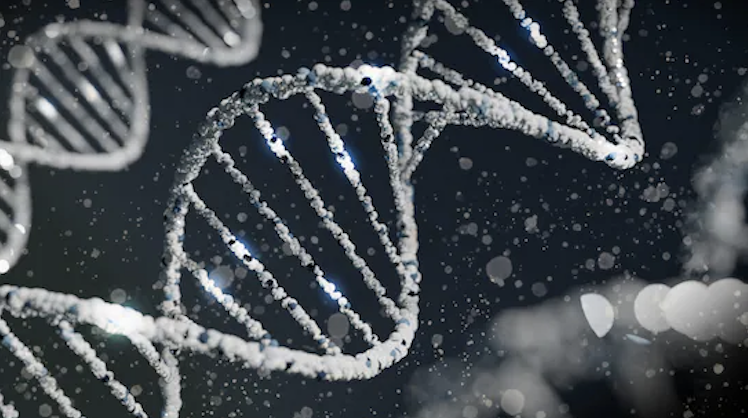
Since the first draft of the human genome was announced 25 years ago, the field of genomics has witnessed dramatic breakthroughs over the past two decades. As the technology for reading genomes progressed rapidly, we saw the successful completion of the Human Genome Project in 2003, which mapped the entire sequence of human DNA. However, writing the genome has proven to be more difficult, and despite all the knowledge obtained through gene sequencing, there is still a lack of understanding about how they work. Though the gene coding regions of the DNA may have been deciphered, they comprise a very small fraction of the total DNA. The functions of other segments of the DNA, such as the highly repetitive DNA segments, regulatory elements, and other functional regions in the non-coding DNA are not entirely known.
The synthetic human genome project aims to construct the human genome from scratch for a better understanding of how DNA works. This would allow the scientists to build and redesign DNA segments or even the entire chromosomes that would make it possible to refine or improve aspects of its activity, enabling its use to make novel gene products or for use in gene therapy.
However, the scientific possibilities arising out of such a powerful technology have raised questions about the chances of misuse and unethical uses as well, and the people are divided in their opinions about this new project
Origins and Objectives
The Synthetic Human Genome Project was formally proposed in 2016 by a consortium of scientists and engineers from around the world. It is led by professor Jason Chin, founding director of the Generative Biology Institute at EIT, Oxford, and involves researchers from the universities of Cambridge, Kent, Manchester, Oxford, and Imperial College London. The five-year multi-centre research project is supported by £10 mn funding from Wellcome.
The project’s goals are not to create a cloned human or a genetically engineered person. Instead, the central aims include :
1) To develop foundational and scalable tools, methods, and technology needed for human genome synthesis.
2) To use biotechnology tools to accelerate the development of safe, targeted cell-based therapies
3) To engineer cells for specific functions
4) To allow changes in the genome more accurately and efficiently and at greater scale and density in comparison to gene editing
5) To create targeted cell-based therapies and virus-resistant tissue transplantation
6) To build tools to facilitate large genome synthesis
7) To proactively engage in the social, economic, ethical, and policy questions that may arise as the technology progresses
Creating a synthetic human genome involves assembling approximately 3 billion base pairs of DNA, the equivalent of the naturally occurring human genome. Unlike genome editing tools like CRISPR-Cas9, which modify existing DNA, this project focuses on de novo DNA synthesis—that is, writing the genome from scratch, and as some experts would say, you can truly understand something only if you can build it from scratch.
 AUSTIN LAM